More of the day stays with the family.
Bringing treatment home can remove repeated journeys to a dialysis centre and the waiting around each appointment, reducing disruption for both patients and carers.

Diagnex has delivered 250+ Home Hemodialysis sessions, with the service operated through defined clinical and operational protocols and a healthcare legacy dating to 1995. A limited number of exclusive territories are now open to established operators.

Diagnex did not design a protocol and then look for partners. The protocol was built by delivering the service - session after session, in real homes, through the clinical complications that only become apparent over years of practice.
That protocol library is what a partner operates under. It exists because it was used.
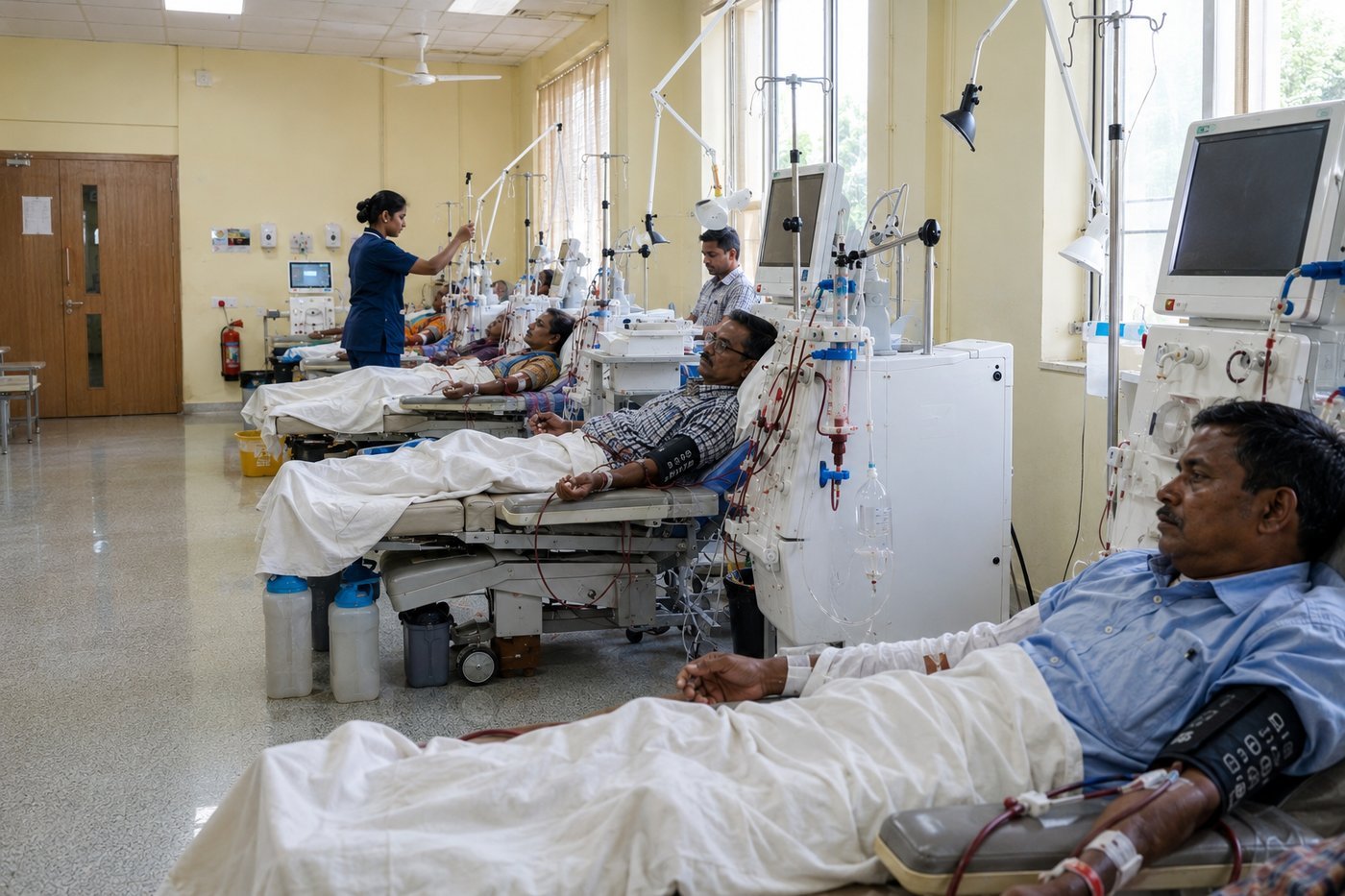
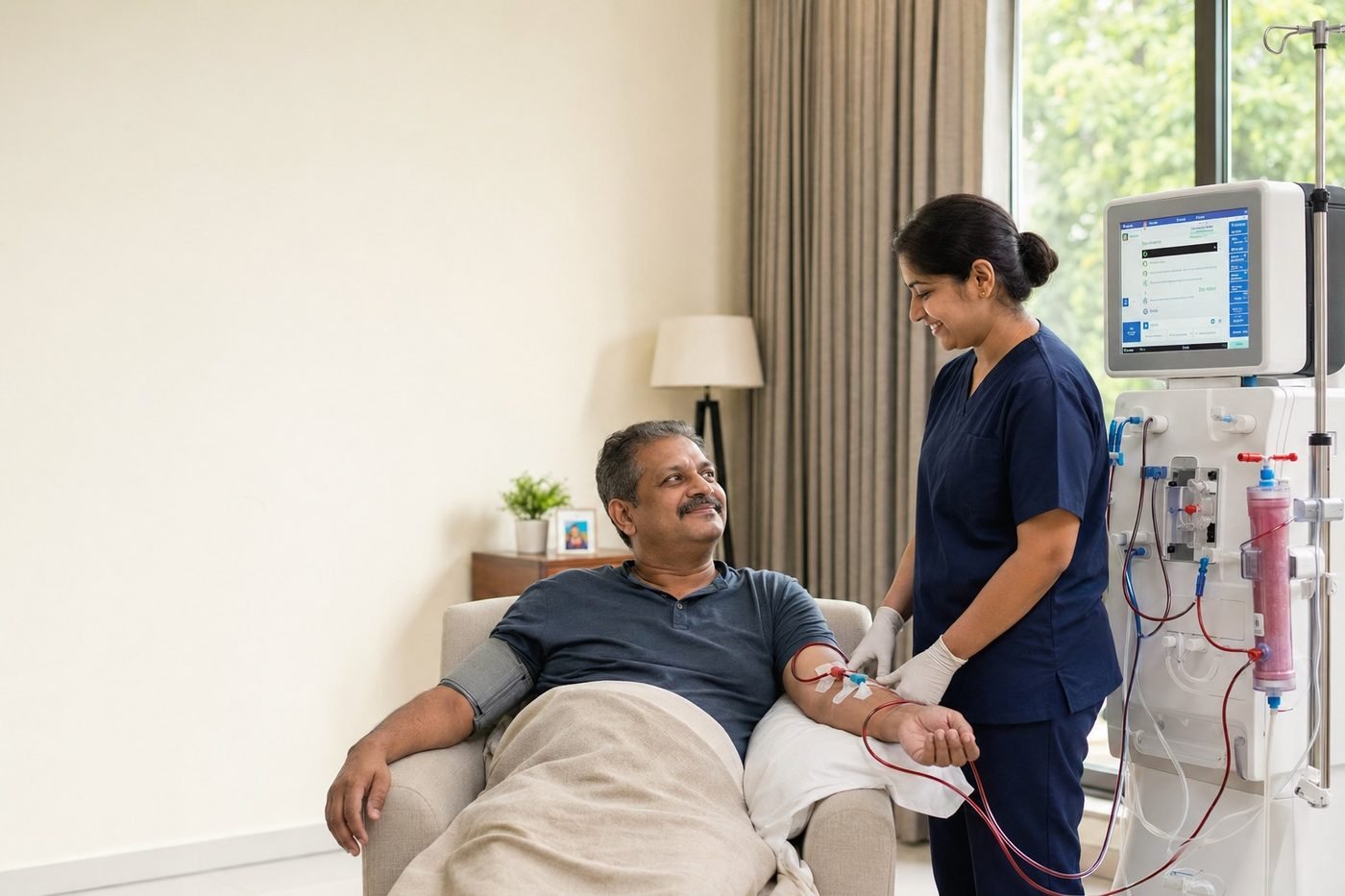 A Diagnex home session
Chronic kidney disease continues to rise across India, driven by diabetes and hypertension in an ageing, urbanising population. Maintenance hemodialysis requires treatment two or three times each week, often indefinitely - and the country has far fewer treatment stations than the patient population requires.
For a growing number of families, home hemodialysis is the practical alternative. What does not yet exist is a network that lets established local operators deliver it to a single clinical standard.
A partner sources consumables through the group's distribution chain, at a cost an independent operator could not reach alone. This is not a promotional discount. It is the structural reason the economics hold - it leaves the operator a sustainable margin at a price the market will pay.
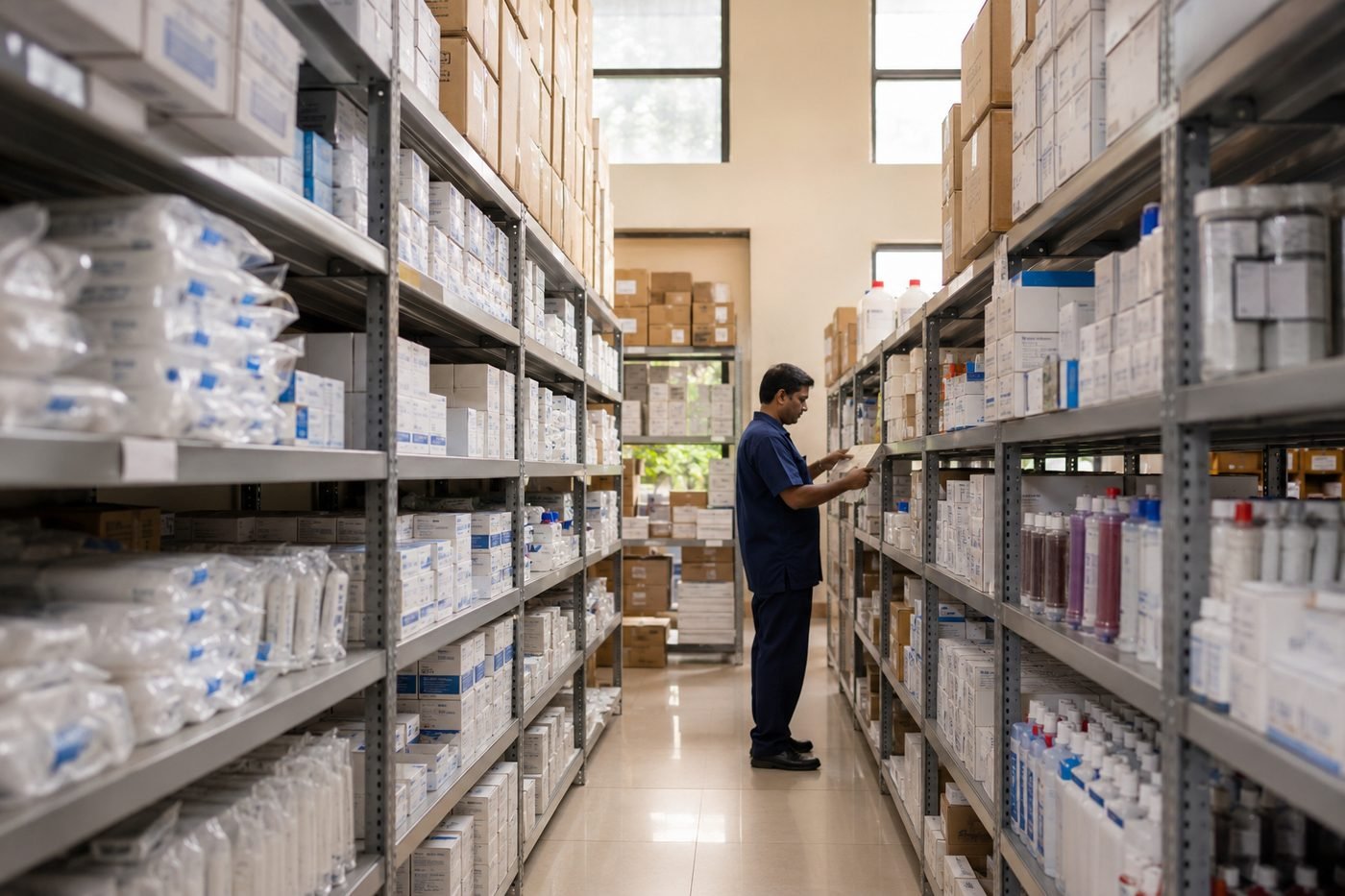 Group distribution
Standardising care delivered by independently owned territories is the hardest problem in franchised healthcare. Diagnex Core is what solves it - every session is logged, the protocol is checked against practice, and clinical escalation reaches a central nephrology team with the record already attached.
 Diagnex Core, in use
An independent operator is never operating alone. Clinical escalation reaches an experienced nephrology team, with the full session record already attached through the platform - so the partner's local clinical staff always have senior support within reach.
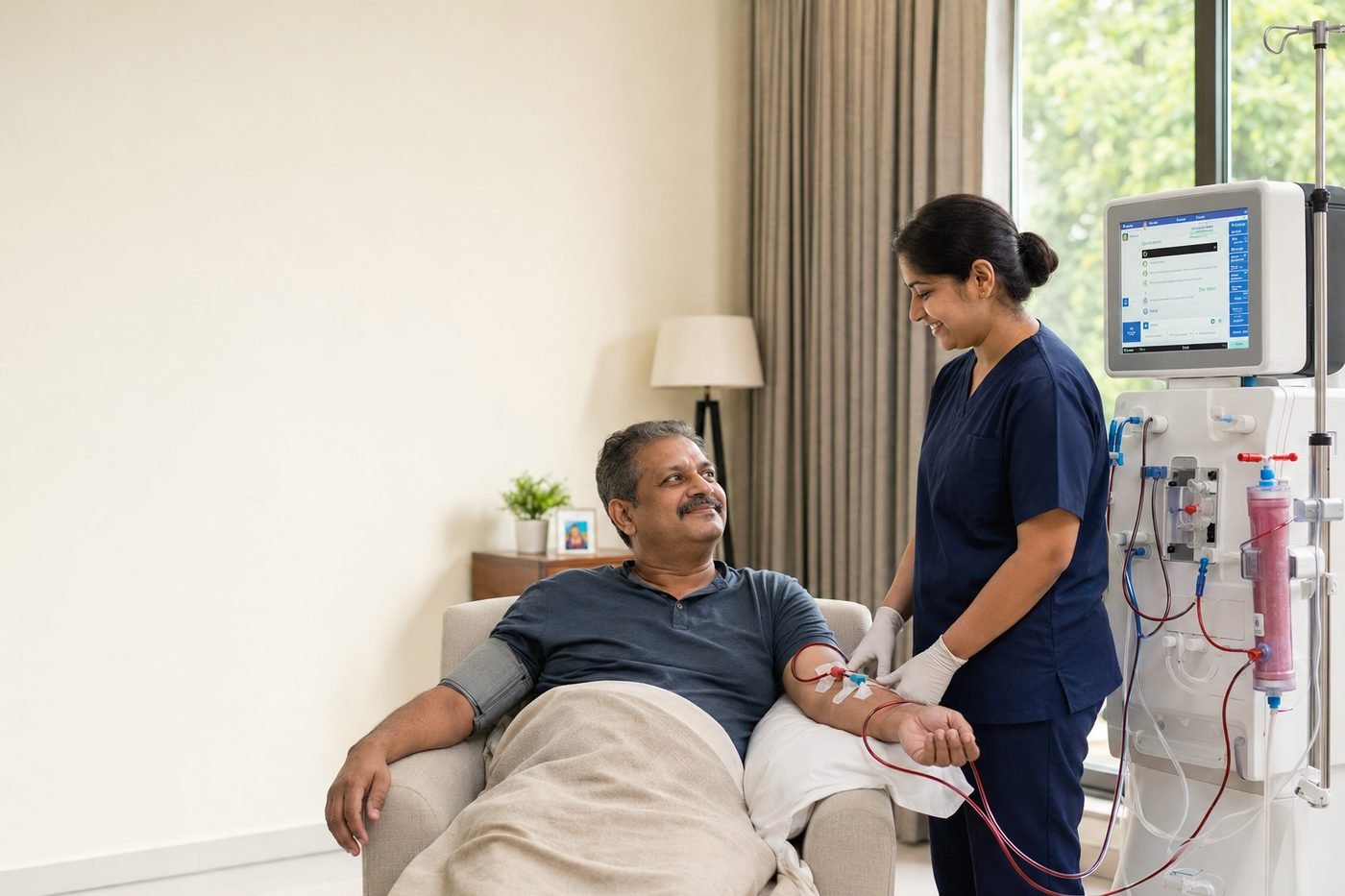 Central nephrology review
The organised chains deliver home dialysis from a central base, dispatching technicians across a city. A Diagnex partner operates within a defined territory, hires and manages a local team, and holds exclusive rights to that market for the term of the agreement.
The partner owns and runs the operation. Diagnex provides the protocol, the supply, the platform and the clinical support that keep the standard consistent across every territory in the network.
Diagnex also supports the partner in recruiting and training the local clinical team — sourcing candidates, and training and certifying technicians to the same standard used at the founding centre. This is available as an add-on service, priced per technician.
Patient acquisition remains the partner's responsibility, supported by referral introductions through the group's clinical network. This is an owner-operated business and requires the partner's direct involvement.
A short application covering your city, business background and the capital available. Deliberately more demanding than most - we would rather have ten serious conversations than two hundred casual ones.
Every application is read by us, not sorted by software. If a territory is unavailable or the fit is not right, we tell you within two days, and we tell you why.
A direct conversation, then a visit to the founding centre. Meet the clinical team, watch a session, see the supply chain, and receive the full information memorandum.
Territory confirmed and agreement signed, then equipment installed, technicians trained and certified, platform provisioned, and your first patients introduced through the clinical network.
A partner chooses between two operating models. Home delivers treatment in the patient’s own home and needs no vehicle of its own — the machine travels by hired ambulance as and when required. Home + Wheels adds a fitted mobile unit, so the territory can also run dialysis on wheels — a second service, at its own price point, reaching patients a home-only setup cannot.
Request access to the full investment detail →
The line-by-line breakdown, the investment calculator and the full economics are released to identified applicants who accept our confidentiality terms. Figures above are illustrations prepared from operating data — not projections, forecasts or guarantees of return.
Home haemodialysis is not simply centre-based treatment moved into a room. The value is in making recurring treatment days easier to live with while the trained care team remains responsible for setup, delivery, documentation and escalation.
Bringing treatment home can remove repeated journeys to a dialysis centre and the waiting around each appointment, reducing disruption for both patients and carers.
Sessions take place in the familiar home environment and follow the prescribed treatment schedule, helping the household organise recurring treatment days with greater predictability.
A trained technician, defined protocols, recorded sessions and access to central clinical escalation give the family a clear, accountable service instead of a different process each time.
Each application is reviewed within two working days, and every applicant is spoken to directly by the Diagnex team.
Apply for a territory